What It Takes to Lead Lasting Healthcare Transformation: Lessons from The Shawshank Redemption
By Al Pilong, August 2025
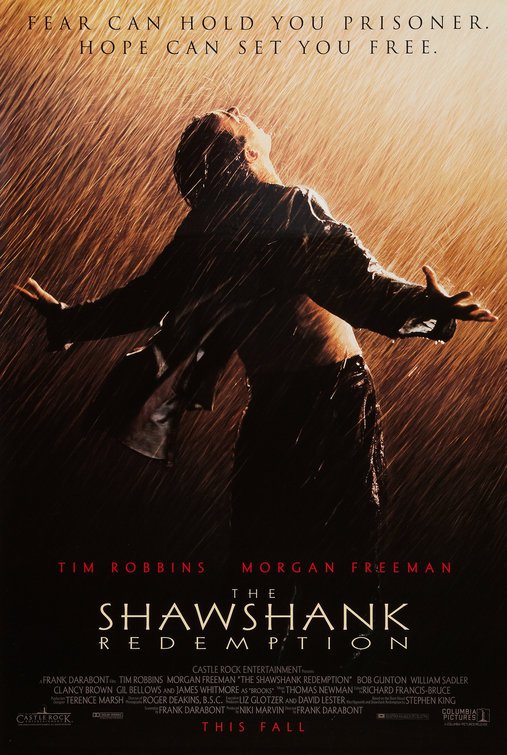
In 1994, Frank Darabont directed one of my top 5 favorite movies, The Shawshank Redemption, starring Tim Robbins and Morgan Freeman. The film details the personal transformation of Andy Dufresne, a man wrongly imprisoned for murder, as he endures the brutal realities of prison life over decades. Through perseverance, hope, and quiet strength, he not only transforms himself but also changes the lives of others around him. Dufresne exemplifies the long-term commitment and personal character needed to effectively lead sustainable organizational transformation in today's instant-gratification society and the complex world of healthcare delivery.
When considering what kind of leadership is needed to initiate and sustain organizational transformation—and how to make it stick—I'm reminded of Jim Collins' influential book Good to Great. His concept of Level 5 Leadership has profoundly shaped my approach to executive leadership. The characteristics represent the ultimate blend of Personal Humility + Professional Will:
• Level 5 leaders are modest, quiet, and self-effacing. They rarely seek the spotlight and often credit others for success.
• Despite their humility, they are extremely determined and focused on long-term success for the company, not personal gain.
• Their ambition is directed toward the success of the organization, not personal fame, fortune, or power.
• They make tough decisions and have the resolve to do what needs to be done, but never in an arrogant or self-serving manner.
• They work to build strong organizations that will thrive after they leave. They set up their companies for success beyond their own tenure.
• They combine the paradoxical traits of being personally humble while fiercely determined to achieve excellence.
We are fortunate in the healthcare community to have many examples of Collins' Level 5 leadership. One such executive is Eric Dickson, MD, President & CEO of UMASS Healthcare. During my first opportunity to hear Dr. Dickson speak recently, I immediately sensed both his humility as well as his fierce determination to do whatever it takes to drive transformation.
There's a book I read many years ago called A Long Obedience in the Same Direction by Eugene Peterson. While this is a work dedicated essentially to a spiritual journey, it nonetheless has broader application for us today. In a culture of immediate gratification, we need to find a level
of persistent commitment to counteract the instant society in which we live and work. Implementing a performance improvement system within a complex healthcare organization requires every aspect of leadership available at the individual and corporate level. This is not something to dabble in, even though dabbling will bring improvement. But what we are all looking for is lasting transformation of a broken care delivery system.
You must be truly fed up with the current state—the burnout plaguing our caregivers, the safety risks threatening our patients, the access barriers facing our communities—to have the drive to initiate the kind of change that a lean transformation requires. You need to care deeply about the mission to sustain the level of hard work and commitment required to achieve true and lasting change. A good question to wrestle with is, "What is your why?" Why do you work in healthcare? Why show up every day and do some of the hardest work imaginable for an entire career? There needs to be a primal, internal drive toward the improvement of care for the most vulnerable among us. As I have often said to newly hired staff during orientation, "We get to come alongside patients and families at some of their most vulnerable and difficult times and make a difference." It's a privilege to do what we do, whether you're laying hands on a patient directly or supporting those who do—the work is a high calling. Committing to improving this work is a lifelong endeavor and one not entered into lightly. It's an Andy Dufresne type of long-term commitment.
Let me share some practical thoughts about the leadership journey many of us have traveled. Many of us in healthcare came to our leadership positions because we were good at solving problems. We were strong clinicians or great managers who had teams that looked up to us and supported our success. But if truth be told, we were outstanding firefighters who could fix or figure out how to resolve any issue. We also knew how to develop the best workarounds to get things done. When we were faced with a problem, we demonstrated heroic efforts to resolve the issue. As a result, everyone looked to us for leadership and we got promoted, again and again, until one day we ended up in the c-suite or even as CEO! The challenge, however, was that leadership solely dependent upon the skills, talents, gifting, and energy of one individual is not a recipe for lasting organizational success.
The other critical factor in a journey toward organizational excellence is the commitment of the rest of the executive team and the board. During my time with Munson Healthcare, I had the privilege of working with an outstanding team of executive leaders who were as committed to the pursuit of perfection in the delivery of patient care as I was. I was blessed to have a CEO for the system, Ed Ness, who was fully engaged in the journey and supported every aspect of the work. He also championed this to the board and as a result, we were able to create a space for operational excellence with a principle-based approach to leadership. With the support of the leadership of The ThedaCare Center for Healthcare Improvement, now Catalysis, namely John Toussaint, and then our onsite support from Jacob Raymer who served as our Chief Transformation Officer, we were able to embark on a long-term journey of transformation which resulted in profound improvement and positive results across all areas of true north, as we focused on Patient Experience, Employee and Physician Engagement, Safety for staff and patients, Quality outcomes, and Financial results.
Organizations like Catalysis continue this vital work, helping healthcare leaders develop the principled approach and long-term commitment necessary for meaningful transformation. The journey begins with leaders willing to take the first step: honestly assessing their current state, committing to the long-term work required, and surrounding themselves with others who share the vision for excellence.
So, what does it take? It's an Andy Dufresne type of commitment. It's Jim Collins' Level 5 leadership. It's the kind of leadership that Eric Dickson, John Toussaint, Ed Ness, Jacob Raymer, and many others have demonstrated. It's a long obedience in the same direction. It's a calling worth giving yourself to because it's what it takes to transform that which is utterly resistant to change.
There is hope for our healthcare delivery system, and the journey is worth every effort. Our caregivers, patients, and communities are counting on us to be the leaders they deserve. As Andy Dufresne reminds us:
"Hope is a good thing, maybe the best of things, and no good thing ever dies."